Magmatic layering
Characteristics:
Layering/banding in an igneous rock;
The layered rocks are cumulates in most cases;
Individual layers have a mineralogy and/or texture distinct from this of the nearby layer;
Individual layers can have uniform or non-uniform (e.g., gradual upward variation) mineralogy or texture;
Layering can be laterally continuous and vertically extensive / layering can also be intermittent and developed locally.
Type of layering in cumulate
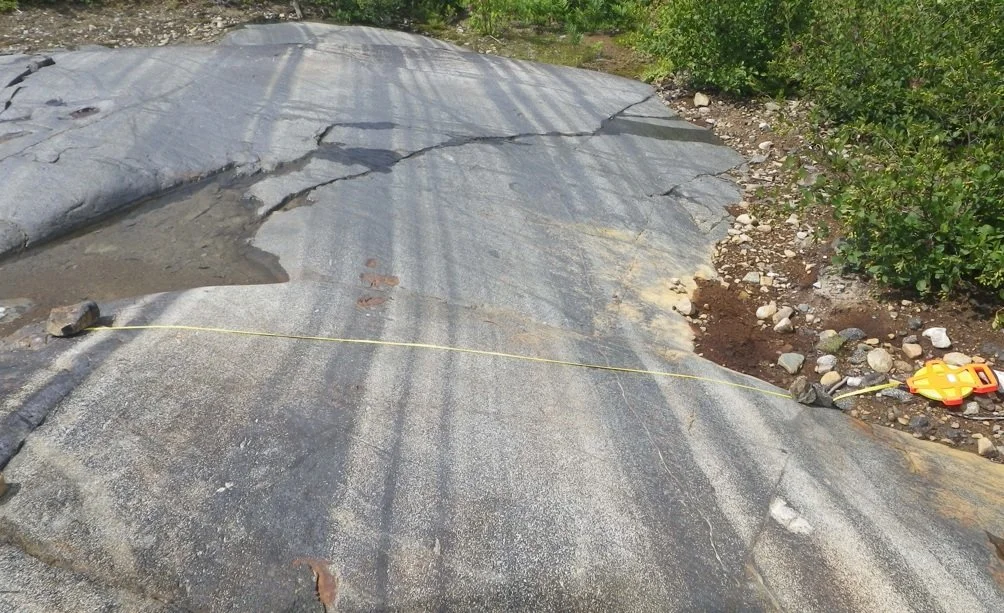
Graded layering – gradual variation in modal proportion and/or mineral size occurs within individual layers;
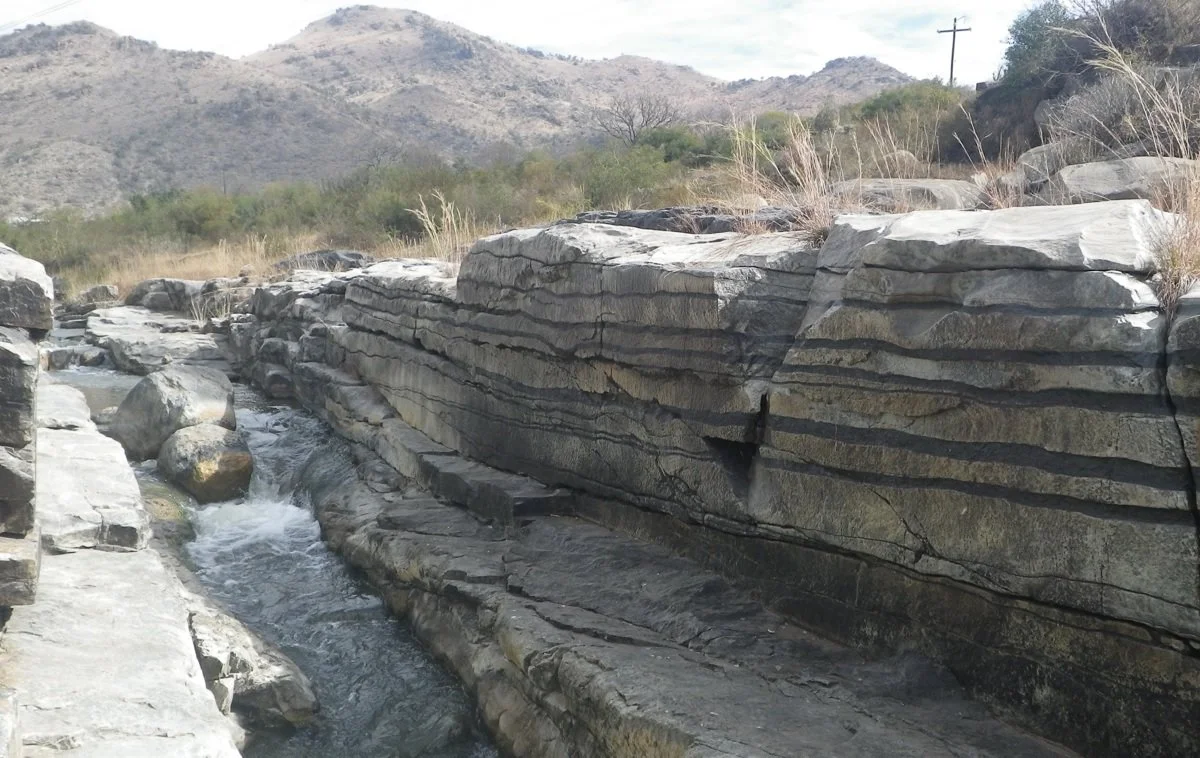
Modal layering – the relative proportion of minerals varies;
Rhythmic layering – layer that systematically repeats, with layers that can be centimetric (microrhythmic) or metric (macrorhythmic) in thickness;
Cryptic layering – variation of the chemical composition of minerals.
Layering in volcanic rock
Flow banding – similarly oriented phenocrysts in a glassy groundmass;
Trachytic texture – idem, with feldspars being the main phenocrysts.
Layering in pegmatite
Stockscheiders – laminated pegmatite. This is due to fluid accumulation along the margin of a magma intrusion;
Brain rock, atoll texture – produced by fluid-saturated magma (forms quartz-rich and feldspar-rich irregular layers).
Origin:
Layering produced by a magmatic process;
Can be due to the appearance/disappearance of a phase during the crystallization sequence;
Fractional crystallisation induces the progressive chemical evolution of the residual melt, which can produce cryptic layering;
Can result from the mechanical sorting of minerals due to mineral mush slumping along the wall of a magma chamber;
Can be due to a large-scale event in the magma chamber (magma replenishment, contamination), as has been proposed for the Bushveld Complex;
Flow orientation, magma movement (flow banding).
-
![]()
Modal layering at Dwars River, Bushveld (2018)
-
![]()
Graded layers, Lac Doré Complex, Chibougamau